
|
 |
|
|||||
|
||||||
| by Vicki Robin | 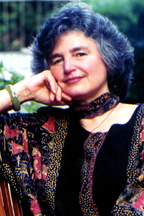
You have spoken! Forty of you filled out the Conversation Café survey last Fall, giving us a clearer picture of what's working and what's not, what's compelling to you about the CCs and what you need from "CC-Central." Here's a snapshot of what you said. True to the original idea, most of you experienced the CCs in a café, but this dialogue method has jumped the fence and is being used at community events, at work, in civic groups, in churches, at conferences and workshops, and even at a Buddhist Monastery. What is the sound of one jaw flapping? |
|||||
|
||||||
| by Jean Robertson of Calgary, Alberta | 
It began with one Conversation Café I tried out in a bookstore last June. Seven people came, several of whom were quite moved by the quality of the experience. Now we have 9 Conversation Cafés running here in Calgary, and we field inquiries f rom people looking to incorporate Cafés in their church life, their annual conventions, and their workplaces. All this is the result of a project by three women to introduce Calgary to Conversation Cafés. The three of us found ourselves connected with a network of about 20 people who were everything from peace educators to personal coaches, activist students to local artists. Each of these people in turn had personal networks of similar people. Putting together a similar network of people likely to be responsive and well-connected electronically should be possible in most large municipalities. That's where I would start in organizing multiple Conversation Cafés. |
|||||
|
||||||
| by Pat Obuchowski of San Mateo, California | 
Back in 2002, Pat Obuchowski began hosting Conversation Cafés in San Mateo county, just south of San Francisco. She soon realized that the CC experience of speaking, listening, and feeling truly heard had a profound effect on many people's lives. After nine months, she began working with "The Bigger Game," a leadership model that led her to incorporate CCs in a highly successful women's day event this year. Here's Pat's story of how it all happened. The Bigger Game asks participants to define their "hunger." What is it that you yearn for? What is your greatest hope or dream for your community? For the world? What MUST change? What MUST be? These questions are similar to those often asked in Conversation Cafés. I found that my hunger is to have every human being know that they make a difference in the world. To know that they have a voice and that they are being heard and listened to. Not only to know that they can be inspired and empowered by others, but also to know that they inspire and empower others by what they say. This to me is the essence of Conversation Cafés. This is my hunger. |
|||||
|
||||||
| by Susan Partnow |  Inquiry,
Not Persuasion Inquiry,
Not Persuasion
A question from Ray Anderson in Kansas sparks this column: As the host I believe that I was both an 'active conversant' and an active listener, because I very much value the idea that 'Cafés are unique because they foster inquiry rather than debate--minds and hearts are both involved.' However, because I have some deeply felt views about the state of the world, what's wrong, and what we can do about it, I worry about expressing myself with too much conviction and making it difficult for others to express their differences. I wonder if other hosts worry about this, too. Overly influencing the conversation is a wise thing for a host to worry about! Thanks for an excellent inquiry, Ray. Hosts tend to be very passionate and energetic people, which are wonderful qualities and are what fire them up to take on the role of hosting. The flip side of these great qualities is that we need to monitor ourselves carefully to keep the space and safety preserved for every participant. |
|||||
|
||||||
| by Jim Rough of Port Townsend, WA | 
One of the most frequent questions we hear from hosts is: how can I create or find topics for my Conversation Café? In our last newsletter, CC co-creator Susan Partnow wrote an article on The Art of Framing Questions. Here we include questions from 3 years at Jim Rough's highly successful Café in Port Townsend, Washington. Jim writes about CCs: I LOVE the conversations at our Conversation Cafés ... I get an AHA! at practically every one because it's DIALOGUE rather than DISCUSSION. If you don't know the difference, you should come. 2002 |
|||||
|
||||||
|
Julie Parsons of Columbia Basin College reports that CCs have become well-known at CBC over the past few years, two or three being held each quarter. They've had consistently successful turnouts ever since their launch in 2002, when the newly-founded club received the "Rookie of the Year" award. The Cafés' sponsor at CBC is the Peer Mentor program, which uses CCs to bring students and faculty together outside the classroom to discuss current events. Popular topics have included: The
Mark of Cain: Is war in human nature? Julie says she's learned that "students are looking for fun, non-educational activities, so I make sure to publicize the Cafés that way, and let the intended little slice of educational value sneak in without fanfare." |
||||||
|
||||||
By
Conference Call, Online Movie, and DVD 
By Conference Call:
You can now join our own Susan Partnow, professional trainer and CC co-founder, for telephone trainings through our sister initiative, Let's Talk America. Find details and registration information on the LTA website. Sign up yourself, or (and!) forward the newsletter along to other folks you know who would enjoy a jump-start into CC hosting. Watch it online: Peruse Conversation Café's host training video, featuring 27 wonderful minutes of everything you need to know to host a Conversation Café, brought to you by CC's personablee co-founders, Vicki Robin and Susan Partnow. You can view or download the movie for free on the CC website here. Host training on DVD: If you would like a copy on DVD, you can send a donation of $25-$10 plus $2.50 shipping and handling to Conversation Café c/o New Road Map Foundation, PO Box 15320, Seattle, WA 98115. |
||||||
|
||||||

Our purpose is to invite EVERYONE to connect in
conversations that matter. In other words, we see the possibility of
creating a culture of conversation that could transform our world. A
very small, smart, dedicated, and paid staff supports the international
network of autonomous Conversation Cafés by maintaining a web site,
organizing host trainings, communicating with hosts, updating the
on-line calendar, and other services needed to invite everyone to
connect in conversations that matter.
Your tax deductible donation is important to ensure that we can continue to build a culture of conversation through Conversation Cafés. We thank you! We also would love your help and talents! Please contact ([email protected]) if you're interested in volunteering. |
||||||
 |
|
|||||

