
|
 |
|
|||||
|
||||||
| by Vicki Robin | 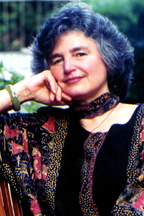
Let's Talk America is using the Conversation Café Process and Agreements to open up a meeting ground in America where people with political differences can speak, listen and learn without having to agree, change or bite their tongues. Many of you have participated as hosts or guests during the election year - and many more are needed post November 2. We've been in a civil war of words. America is as polarized as it's been in a century. Friends, neighbors and even families aren't talking. Tensions and stress are high - and holding. Like during the post-911 period, post November 2 Americans will need to make sense together of what just happened to us as people and a nation. After 911 the number of Seattle Conversation Cafés grew from 3 in the Summer to 24 in January - and we anticipate that LTA conversations (200 so far nationwide) will be an essential part of people's way to transform our grief, anger, confusion and fear to hope, trust and engagement in shaping the future. LTA is the leading edge of the "mending edge" of politics. Our American spirit of innovation and independence tend to cut the ties that bind us as communities and citizens - and LTA Conversation Cafés re-knit that web. We have discovered that Americans have a yearning to bridge differences, to talk about "taboo" politics in a civil manner - just to understand themselves, our democracy and the times we are living through. We have discovered that we may be making verbal progress on racism and religious prejudice, but we still feel very free to be foul mouthed and insulting politically - indeed, if you are not they call you apathetic, undecided, disengaged. We've discovered that people in the middle aren't blasé about democracy. They care and think deeply but don't find that divisive, "my way or the highway" polarization expresses their views or their dreams for our country. |
|||||
|
||||||
| Alec R. Colovos | 
I am a high school teacher in Spanaway, Washington. I was so impressed with the Conversation Cafés I participated in over the summer that I went into my communication arts classes on the first day of school and turned them into Conversation Cafés. I first found that in order to ask high school students, forced into a class by compulsory education, to participate in a Conversation Café, it was necessary to modify the structure because of the need to build the kind of trust that all of us who go to a Café simply assume. During the first quarter of the semester, while I've been teaching the students computer skills, I have also had them in Café after Café, talking about whatever the group they are in wishes to talk about, building trust in each other, in the whole group and in themselves, so that we will be able to move to more meaningful conversation in the second quarter. I took a lot of feedback from students on what would help make this happen. |
|||||
|
||||||
| by by Mahalene Louis, host at the Triumph Café, Austin, Texas | 
Sunday, 1 pm. The drive to Triumph Café is lovely. Straight up the Mopac, under a wonderful sun! 1:15 pm. Tobin is already here; our table is ready. Between a few flyers, a little red and white table cloth, and the familiar blue and green round earth: it is unmistakable; a Conversation Café is about to be served! I like Tobin. He is always so kind, and so present when he listens. 1:20 pm. Guests start arriving. Some familiar faces, some not. What are we going to talk about today, I wonder? I always love seeing where the adventure of the day, the synergy of our table will take us. Conversation Café, here we come! |
|||||
|
||||||
| by Susan Partnow |  The
Art of Framing Questions The
Art of Framing Questions
One of the key ingredients for a lively and deep conversation is the quality of the question. How we frame an issue is fateful and sets us on a vector that can become divisive and polarizing or inviting and expansive in our thinking. The key is to develop a question that calls for reflection and personal sharing and avoids embedded assumptions. Consider the difference in these examples offered by the Public Conversation Project: What thoughts and feelings are stirred in you when you see a flag on a car or a house or a lapel? If and when you display one, what does it mean to you? (yes!) or, What do you think of all the flag-waving that is going on out there? (no!) Personal sharing encourages people to speak from their own experience and reveals the underlying values and needs that lead them to their perspective, opening for us a deeper level where we can all find ways to relate. Sweeping generalizations or abstractions often polarize, stereotype, and separate us. It's also important to avoid jargon, judgments, or red flag words. |
|||||
|
||||||
| by Aria Cahir, Co-Host at the Issaquah Library |
If you are familiar with Conversation Cafés - already hosting a Café or thinking you'd like to - why not consider being the seed for a new Café in a new place when you're traveling for pleasure or business? It's a great way to meet local people in the place you're visiting. It will make your travels more fun and interesting, and what a great deed you will accomplish by getting a new group going and spreading Conversation Cafés wherever you go! Here are some suggestions for How To Do It. 1. SEVERAL WEEKS BEFORE ARRIVAL: Call the public library or Chamber of Commerce of the place you'll be visiting and ask the librarian to help you locate a relatively quiet place to meet; for example: a café or library or community center meeting room. Restaurants can work under certain circumstances, but interruptions when food is ordered and served can be disruptive. |
|||||
|
||||||
By
Conference Call, In Person, and on DVD 
By Conference Call:
Katharine Wismer - professional coach, trainer, and Conversation Café host extraordinaire - is continuing her monthly series of host trainings via conference call. These sessions have been warmly appreciated by folks all around the US (and occasionally beyond!) who enjoy the "live" introduction to the hosting process and the chance to ask questions. You can find more details and registration information on our website. Sign up yourself, or (and!) forward the newsletter along to other folks you know who would enjoy a jump-start into CC hosting. Face-To-Face: November 9th, 6:30-9pm at the Jackson Street Safeco Center. Conversation Café host trainings are open to anyone and take new and prospective hosts deeper into the basic principles and "situation handling" of hosting Conversation Cafés. The training includes a practice conversation. Click here for registration information. Host training on DVD... just out! Earlier this year, Conversation Café's personable co- founders, Vicki Robin and Susan Partnow, recorded 27 wonderful minutes of everything you need to know to host a Conversation Café... plus the history of Conversation Cafés, how to organize a conversation near you, and more. You can view or download the movie for free on the CC website here. Or, if you would like a copy on DVD, you can now send a donation of $10-$25 plus $2.50 shipping and handling to Conversation Café c/o New Road Map Foundation, PO Box 15981, Seattle, WA 98105. |
||||||
|
||||||

Our purpose is to invite EVERYONE to connect in
conversations that matter. In other words, we see the possibility of
creating a culture of conversation that could transform our world. A
very small, smart, dedicated, and paid staff supports the international
network of autonomous Conversation Cafés by maintaining a web site,
organizing host trainings, communicating with hosts, updating the
on-line calendar, and other services needed to invite everyone to
connect in conversations that matter.
Your tax deductible donation is important to ensure that we can continue to build a culture of conversation through Conversation Cafés. We thank you! We also would love your help and talents! Please contact the CC Administrator ([email protected]) if you're interested in volunteering. |
||||||
 |
|
|||||
