 |
 |
 |
| ||||
| ||||||
| by Vicki Robin | Master hosts have
three minds active at once 
Some
people meditate. Some engage in the radical practice of hosting.
Meditation strives for one-pointedness. Hosting goes for
three-pointedness. Meditation is private and quiet. Hosting is public and
noisy. Rather than resisting 'the world,' it works with the grain of our
24-7, over-busy multi-tasking 21st Century minds.
A host is an opening in time where meaning comes into being. A host is free to listen like a lover and speak like a sage. A host can act like a fool, saying the unsayable, asking the unaskable. A host wonders. As in awe. As in 'it's a wonderful life.' A host doesn't wait for others to tell them what the world means. A host just engages with everyone and everything as though it were her world. And actually, it is. Conversation Cafés are like 'meditation retreats' where you learn the practice of hosting. Once mastered, you can do it in every conversation at every dinner table, board meeting, Sunday school class, church service, party and more. | |||||
| ||||||
| by Chad M. Gesser | The locals in
Owensboro are beginning to see the value of sharing ideas, perspectives,
and values 
So where
is Owensboro? We are a community of about 100,000 situated on the Ohio
River, about 150 miles west of Louisville. Owensboro is fortunate to have
several organizations and groups interested in promoting civic dialogue,
deliberation, and participation in community life. We began our local
Conversation Café initiative in February of 2003. Since that time, we have
conducted a little over 30 separate Conversation Café events. Our Cafés
typically draw local civic and elected leaders to engage in dialogue and
discussion about issues ranging from international development to local
government merger. We usually establish a suggested topic for each event.
The local Conversation Café initiative began after I recognized a common theme in the sociology classes that I teach here at the Owensboro Community and Technical College. Semester after semester I found myself telling students that they should take advantage of their classroom experience, given this (the classroom) was their only opportunity as an adult in the community to truly engage with others and to share viewpoints on a variety of social issues in a safe environment. With the tragic events of September 11, 2001, and the deep sadness in my soul that remained in its aftermath some fourteen months later, I came across the Conversation Café process. I recognized this process as just what our community needed to bring folks together, to serve as a link between individuals and the community, and to provide a safe manner to address pertinent local social issues. | |||||
| ||||||
| by Kat Gjovik, host at the Pegasus Coffee House, Bainbridge Island, WA | Conversation Café on
Bainbridge Island follows showing of Fahrenheit 9/11 
That
night, every seat in the Bainbridge Island theater was filled in
anticipation of Michael Moore's Fahrenheit 9-11. All three showings sold
out early in the afternoon. This film continues to break records daily at
our little theater, and to create quite a bit of traffic congestion.
During the film: laughter, groans, applause, jaws agape, and tears. After
the film: 21 people gathered at a wonderful restaurant across the road
from the theater. It was a success and I'm considering convening another
post-movie CC, perhaps with "What the Bleep," which begins at the same
theater on July 15.
Before the day of the film, I worked with TJ, the theater owner, who agreed to announce the CC prior to showing the film, and I also sent an announcement to my Pegasus CC listserv (about 100 people), as well as friends, neighbors, etc. The folks at Ruby's were most generous, inviting us to use their private dining room. I asked prospective participants to show their gratitude to Ruby's by purchasing dessert or a snack or beverage. | |||||
| ||||||
| by Katharine Wismer | For Democracy,
Citizenship, and Patriotism 
On
Saturday, September 11, 2004, people around the world will come together
at public places like local libraries to share and discuss ideas about
democracy, citizenship, and patriotism through public talks, roundtables,
and performances. Libraries are ideal hosts for such community events.
They are free. They are open to the public. And there are over 16,000
public libraries in the U.S.
The September Project is currently working with all kinds of citizens, groups, and organizations. King County Library System in Washington State approached Conversation Cafés to create on-going conversations in their libraries around the Puget Sound area near Seattle, WA. Conversation Cafés will have a key role in moderating/facilitating, and training people in how to take the skills out into their own communities. | |||||
| ||||||
| hosted by Katharine Wismer | Tuesday, July 27th -
6-7 pm PST / 9-10 EST 
Aria, an
Issaquah, WA co-host, suggested monthly conference calls for hosts. Last
month we gathered on the phone to brainstorm, ask questions of one
another, celebrate successes and inspire one another. We talked about the
following: What is diversity like at your cc? How do you deal with
different personality styles? How do you select topics at your cc? Do you
think the culture of the city can discourage cc from spreading?
Don't miss this next gathering of hosts everywhere via conference call! All it costs is a long-distance call. Natalie Vekony from Sonoma County, CA will join us to share her experience hosting Conversation Café at a movie theater after the showing of Fahrenheit 9/11. The movie theater advertised her CC on their posters! To get regular updates of these calls sign up for the cchost email list by emailing Claudia with your interest, [email protected]. Tonight's conference call: | |||||
| ||||||
| by Susan Partnow, Partner Coordinator of Let's Talk America | "How do you handle
participants that like to talk?" 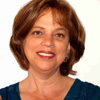
Q:
"One member of our group does not seem to be aware that he talks much
more than anyone else. "
Susan: Here is where the process and agreements can be your 'best friends' as a host. Before the conversation even begins, when you read through the agreements, you can take some extra time to emphasize why they are so important and get the group's agreements for how to approach the problem. For example, "Listen with respect" -- remind the group most of the conversation is actually spent listening. Emphasize that the goal is discovery and curiosity: that ah-ha moment, when something you never thought of before arises... which comes from listening more than speaking. | |||||
| ||||||

Our purpose is to invite EVERYONE to connect in conversations that
matter. In other words, we see the possibility of creating a culture of
conversation that could transform our world. A very small, smart,
dedicated, and paid staff supports the international network of autonomous
Conversation Cafés by maintaining a web site, organizing host trainings,
communicating with hosts, updating the on-line calendar, and other
services needed to invite everyone to connect in conversations that
matter.
Your tax deductible donation is important to ensure that we can continue to build a culture of conversation through Conversation Cafés. We thank you! We also would love your help and talents! Please contact ([email protected]) if you're interested in volunteering. | ||||||
 |
| |||||
